
BYU Country Swing Management System
Brigham Young Univsersity
Orchestrating logistics for 1,300+ students and 50+ instructors through a centralized platform.
Overview
BYU Country Swing is one of the largest student organizations on campus, serving over 1,300 active members. The club relies on a rotating corps of 50+ volunteer instructors to manage weekly events, including door checks, partner dance instruction, and line dance teaching.
As a Head Instructor and Officer, I recognized that our leadership team (9 officers) was facing a critical bottleneck. We were spending more time managing data entry and training logistics than actually dancing or mentoring. To solve this, I architected a custom management system that automates logistics, decentralizes training, and ensures equitable volunteer opportunities.
The Challenge
Managing a team of 50+ volunteers created three distinct problems:
- The Training Bottleneck: With only a handful of senior instructors (myself and four others), training 50 volunteers on the nuances of every move and technique was impossible. We needed a way for instructors to "self-serve" their training.
- Scheduling & Fairness: With so many volunteers, it was difficult to track who had taught recently versus who was being overlooked. We needed an algorithm to ensure an equitable distribution of teaching roles.
- Curriculum Tracking: We risked repeating the same lessons or skipping vital techniques. We needed a system to track "Last Taught" data to guide lesson planning for Beginner, Intermediate, and Technical tracks.
The Solution
I developed a data-driven ecosystem using Google Apps Script and a custom Spreadsheet UI to minimize the learning curve for users while running complex logic in the background.
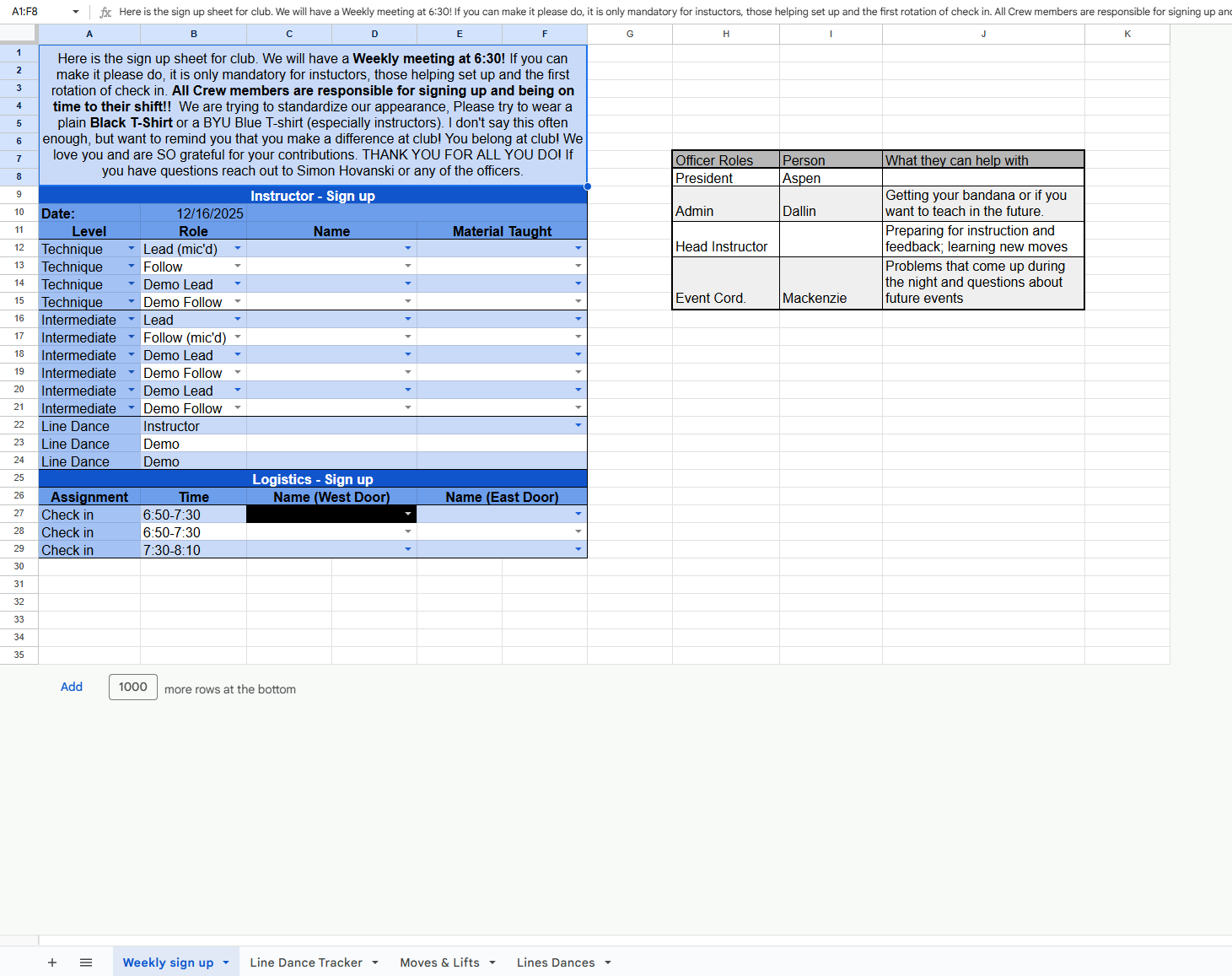
1. Automated Logistics & Role Management The system replaces manual scheduling with an automated sign-up interface. Custom scripts capture weekly role data, instantly updating the master database. This removed the administrative burden from the officers, allowing us to focus on event quality rather than data entry.
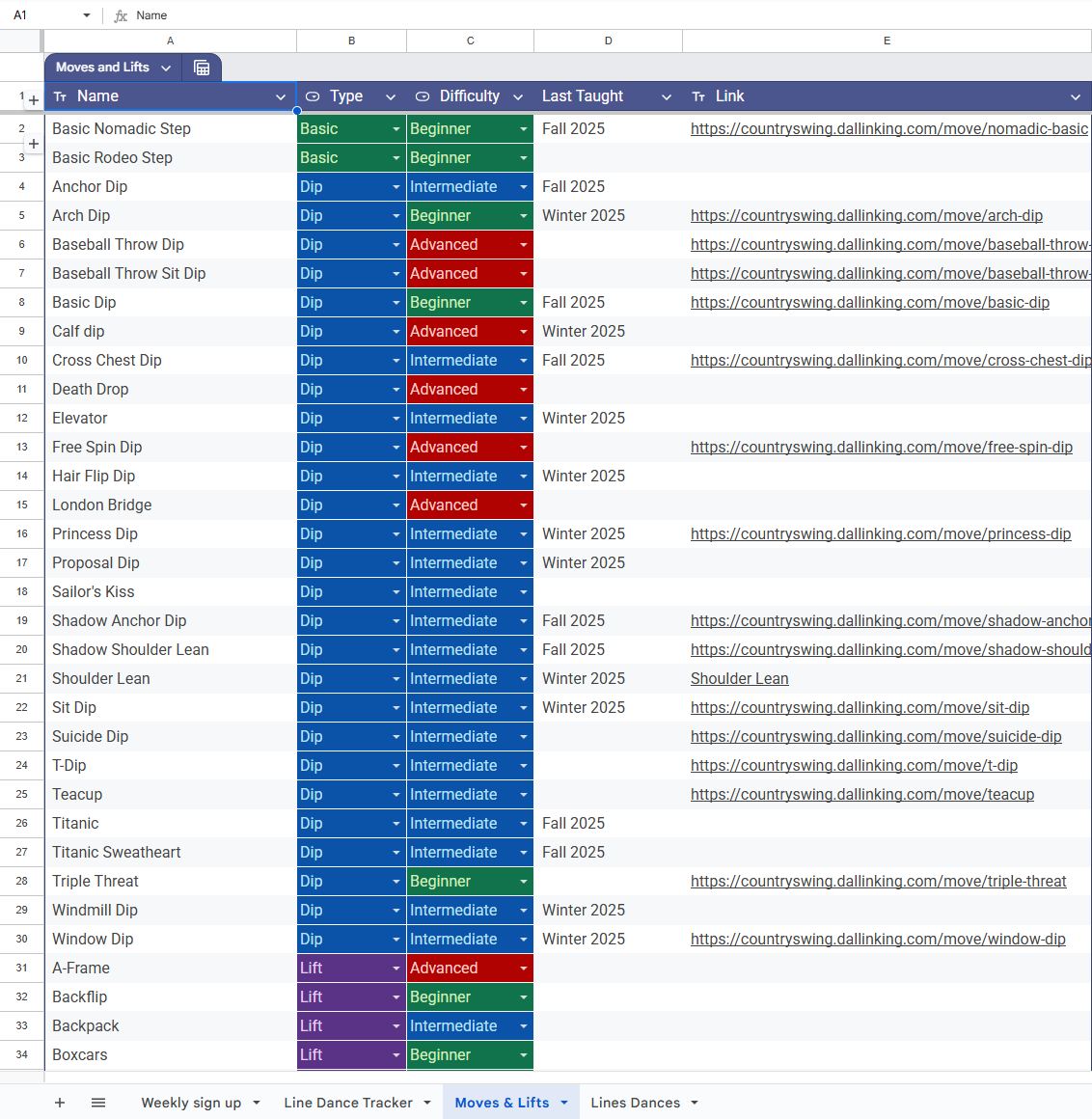
2. Integrated Knowledge Base (The "Backbone") I linked the management system directly to my external project, countryswing.dallinking.com.
- Dynamic Lesson Planning: Based on what is scheduled (Beginner vs. Intermediate), the system pulls links to specific moves from the website that haven't been taught recently.
- Standardization: This serves as the single source of truth for move names and techniques, ensuring that all 50 volunteers teach consistent material without needing direct supervision from senior staff.
3. The "Inclusion Algorithm" To prevent favoritism and oversight, I wrote a custom algorithm that analyzes historical data to flag volunteers who haven't taught recently. This creates a "Priority List" for scheduling, ensuring we utilize our entire volunteer workforce and keep morale high.
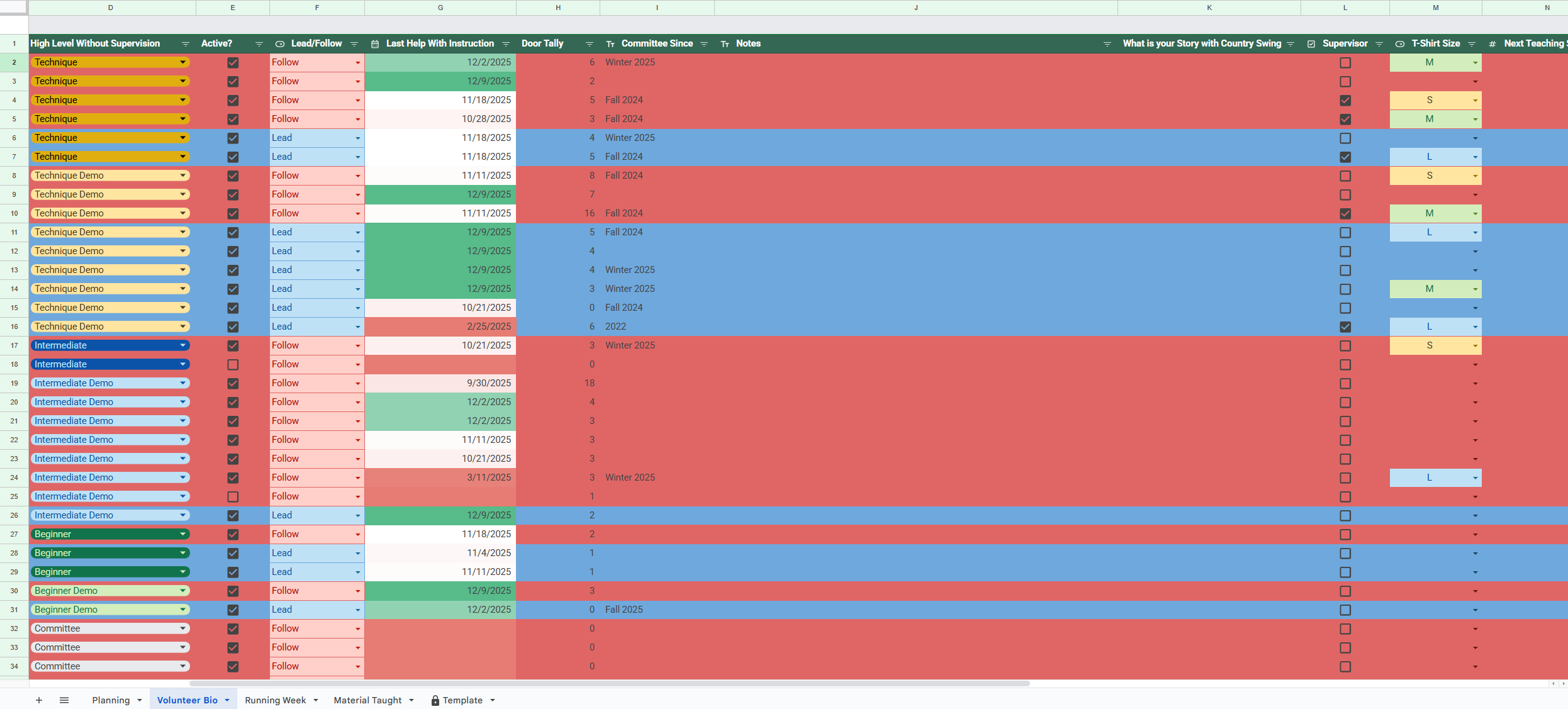
4. The "Volunteer Excellence" Tracker We implemented a metric-based reward system. The software tracks every contribution—teaching, working doors, and attendance. This objective data is combined with end-of-semester peer surveys to identify and reward our most dedicated volunteers, fostering a culture of appreciation and retention.
The Impact
- Scalability: The system successfully manages logistics for a community of 1,300+ students.
- Efficiency: Eliminated hours of weekly manual data entry for the 9-person officer team.
- Quality Control: Standardized instruction across 50+ volunteers by linking real-time schedule data to the digital video curriculum.
- Data-Driven Leadership: Shifted decision-making from "gut feeling" to objective metrics regarding volunteer participation and lesson history.