
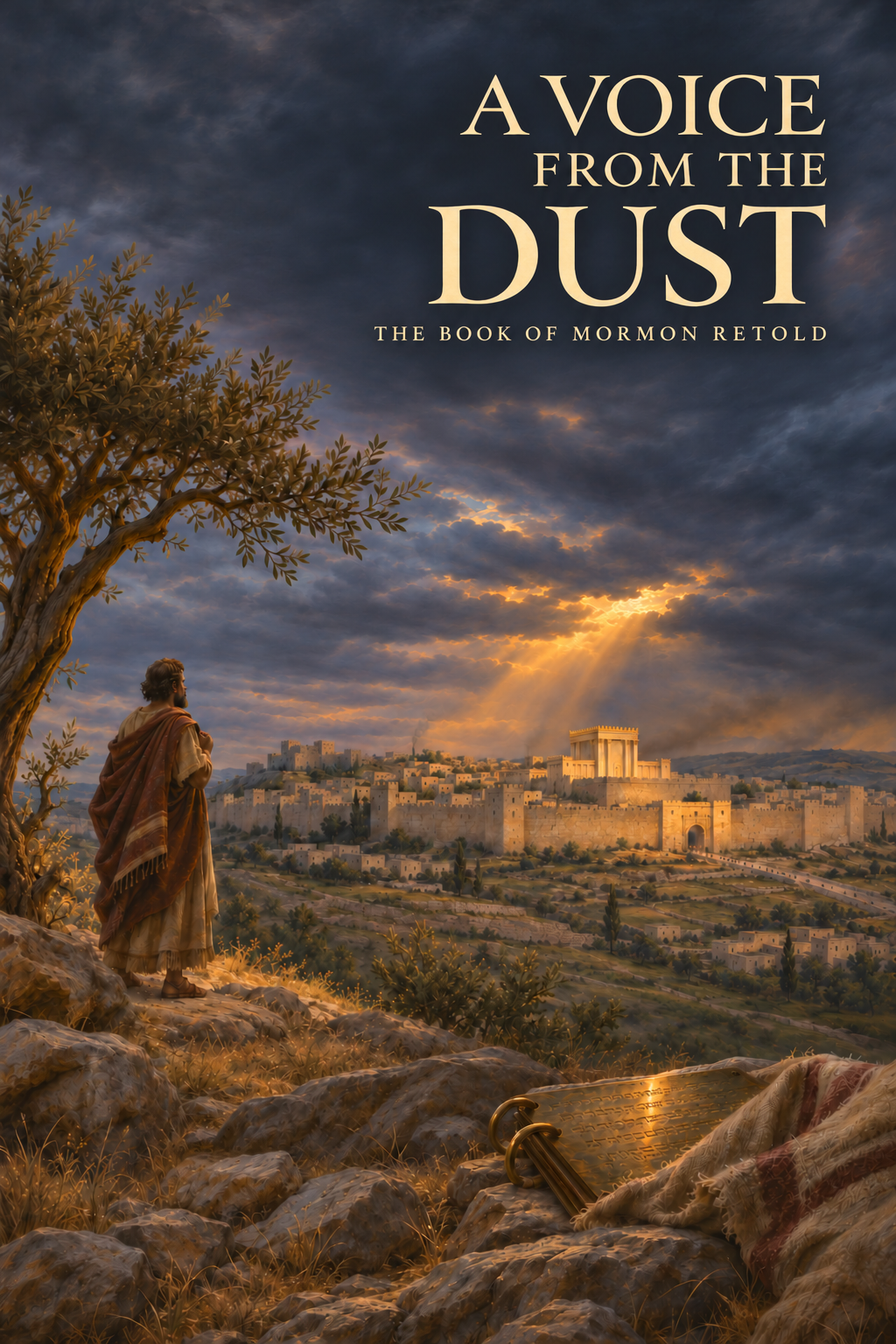
A Voice from the Dust: The Book of Mormon Retold
A researched novelization of the Book of Mormon, published one chapter at a time, that explores what its people may have experienced between the lines of the record.
The Book of Mormon usually tells us what happened and what it meant. This project asks a different question: what was it like?
A Voice from the Dust is a novelization of the record, published on my blog as a book with a new chapter every Sunday. It keeps the canonical events and spiritual core of the text while giving its people room for motives, relationships, fear, grief, conflict, and growth. What did Laban fear? Why did Zoram take an oath with strangers in the dark? What did Sariah say when Lehi told her they were leaving everything?
The story opens in Jerusalem in the first year of King Zedekiah, a city waiting to fall to Babylon. Each chapter follows whichever person gives the best view of that moment: Laban at the city gate, Lehi on the night of his first vision, Sariah as she waits for an answer of her own, Laman as his father's warning turns a market crowd against him. The point of view changes, but each chapter picks up close to where the last one ended, so it reads as one continuous story.
The story is written for two audiences at once. A reader who has never opened the Book of Mormon should be able to follow it without a study guide. A reader who knows the record well should recognize the moments they expect while seeing the people inside them with new depth.
Writing between history and scripture
Each scene has to balance three kinds of material:
- What the Book of Mormon explicitly records.
- What the text and historical setting reasonably imply.
- What the narrative invents to connect those moments into a lived story.
The project keeps those categories distinct during research even when they become seamless on the page. Character notes track canonical facts separately from interpretive choices, and historical research, drawing especially on 2 Kings and Jeremiah, grounds daily life in Jerusalem. Events happen as the record describes them, in the order it gives them, and its best-known words are quoted as they stand. The aim is not to use spectacle to fill every gap. It is to make each addition plausible, human, and respectful of a text readers hold sacred.
The finished work should invite people back to the scripture with more curiosity and empathy. Faith is shown through the choices and costs of the people living it, not added as a lecture around them.